
Rosacea
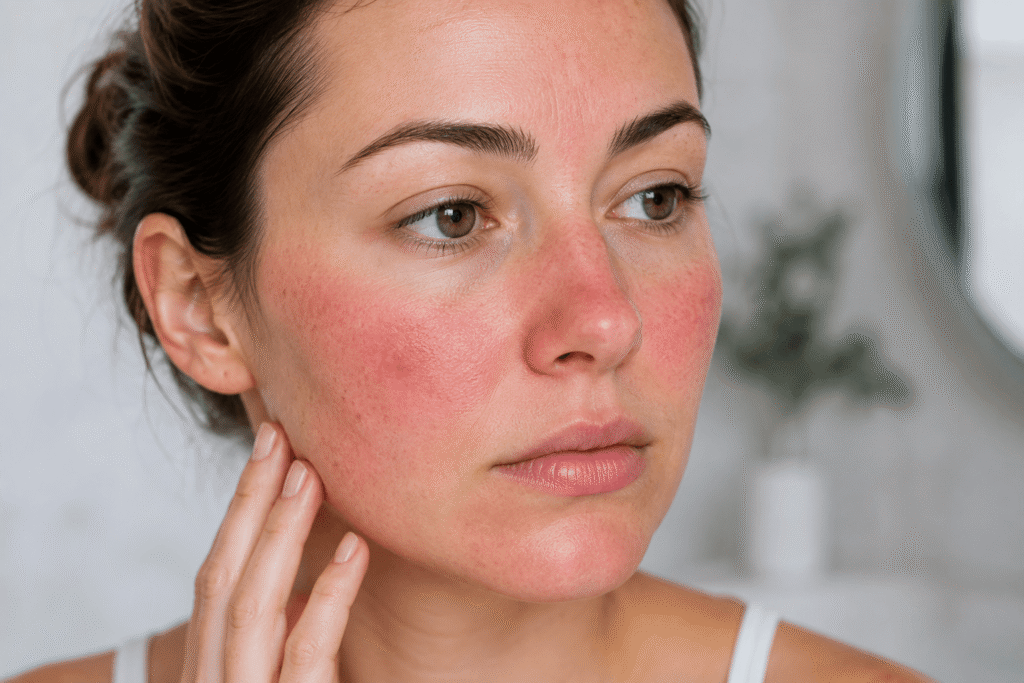
What Is Rosacea?
Rosacea is a chronic skin condition marked by facial redness, visible blood vessels, and inflammatory bumps. Dermatologists recognize four subtypes, which can occur alone or in combination: erythematotelangiectatic (persistent redness with visible vessels), papulopustular (red bumps and pus-filled pimples resembling acne), phymatous (skin thickening, most often affecting the nose), and ocular (redness, irritation, and dryness of the eyes).
The exact cause isn’t fully understood, but rosacea involves blood vessel and immune system reactivity that’s easily triggered by specific factors, sun exposure, heat, alcohol, spicy food, and stress among the most common.
How to Detect Rosacea
- Persistent facial redness or a tendency to flush and blush more easily than before
- Small, visible blood vessels near the surface of the skin
- Red bumps or pus-filled pimples that resemble acne, without the blackheads
- Thickening skin or gradual enlargement of the nose (rhinophyma)
- Eye irritation, dryness, redness, or a gritty feeling (ocular rosacea)
- Flare-ups triggered by sun, heat, alcohol, spicy foods, or certain skincare products
When Should You See a Doctor?
- Facial redness or flushing lasts longer than a typical blush and keeps recurring
- You're developing acne-like bumps that aren't responding to standard acne treatment
- You notice visible blood vessels on your cheeks or nose
- Your nose is starting to look thicker or more enlarged
- You have eye irritation or dryness alongside facial redness
What Happens If Rosacea Is Left Untreated?
Rosacea tends to progress gradually without treatment. Redness and visible blood vessels can become more permanent over time, and in later stages, phymatous rosacea can lead to rhinophyma, a noticeable thickening and enlargement of the nose that often requires surgery to correct once established.
Ocular rosacea left unaddressed can affect eye comfort and, in more significant cases, vision. Beyond the physical changes, chronic, visible facial redness can take a real toll on confidence. Early, consistent treatment is far more effective at keeping rosacea controlled than trying to reverse changes after they’ve become permanent.

The Genesis Dermatology Process
- A consultation to identify your specific subtype and personal triggers
- A personalized medication plan, which may include topical treatments like metronidazole or azelaic acid, or oral antibiotics for more inflammatory rosacea
- Laser or light-based therapy (such as IPL) to reduce persistent redness and visible blood vessels
- Practical guidance on sun protection and trigger avoidance, especially important living in Jupiter's climate
- Referral to ophthalmology if ocular symptoms are present
- Ongoing follow-up, since rosacea is a chronic condition best managed with a consistent long-term plan rather than a single treatment