
Hyperpigmentation
What Causes Forehead Lines?
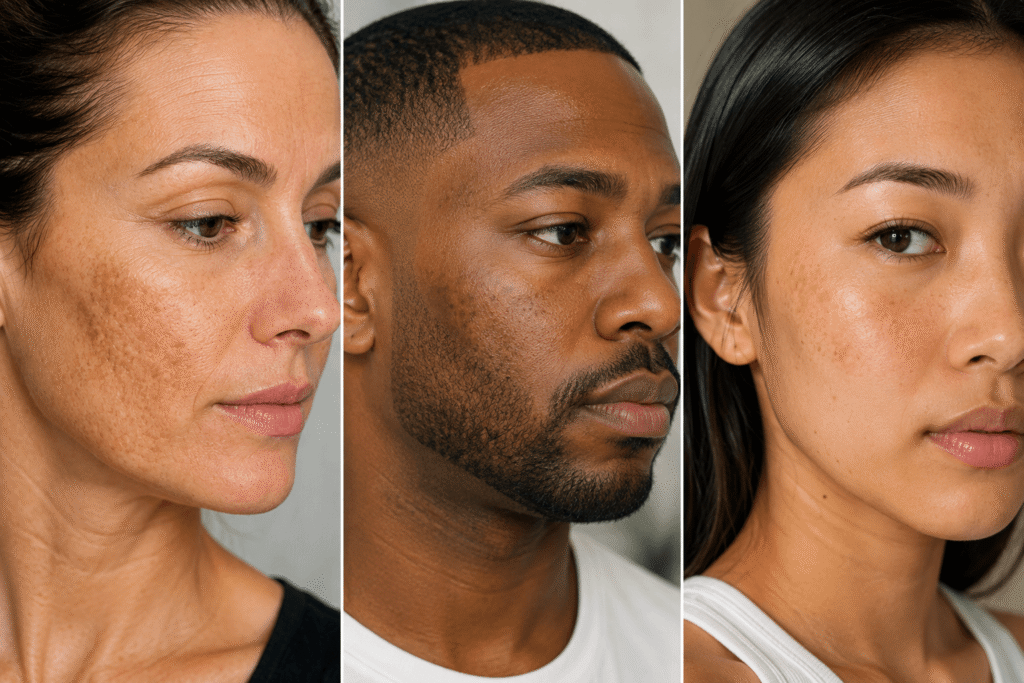
Hyperpigmentation happens when certain areas of skin produce more melanin, the pigment responsible for skin color, than the surrounding skin. That excess pigment can be triggered by several different mechanisms, cumulative sun exposure (producing sun spots, also called age spots or solar lentigines), inflammation or trauma to the skin from acne, eczema, or injury (post-inflammatory hyperpigmentation, or PIH), and hormonal changes combined with UV exposure (melasma).
Because these different types can look similar at a glance but respond very differently to treatment, and some, like melasma, can actually worsen with the wrong approach, getting an accurate diagnosis is the most important first step before starting any treatment plan.
How to Detect Hyperpigmentation
- Flat, well-defined brown spots on sun-exposed areas like the face, hands, shoulders, and arms (sun spots)
- Dark marks or patches left behind after a pimple, cut, burn, or other skin inflammation has healed (post-inflammatory hyperpigmentation)
- Larger, symmetrical, blotchy brown or gray-brown patches, typically on the cheeks, forehead, or upper lip (melasma)
- General patchiness, dullness, or blotchy unevenness across the skin without one specific dark spot
- Darkening that becomes more noticeable after sun exposure and less noticeable in winter months
When Is It Worth Treating Hyperpigmentation?
- Dark spots or patches are bothering you cosmetically or affecting your confidence
- You're not sure what type of hyperpigmentation you have, or what's causing it
- Over-the-counter brightening products haven't produced the results you're looking for
- You want to make sure a spot is actually benign pigmentation and not something that needs a different kind of evaluation
- Your hyperpigmentation seems to be getting darker or spreading despite consistent sun protection
What Happens If Hyperpigmentation Is Left Untreated?
Most hyperpigmentation isn’t a medical danger, but it also rarely improves on its own, and in most cases it tends to become more pronounced with continued sun exposure. Sun spots deepen and multiply the longer skin goes unprotected, PIH can take significantly longer to fade without any active treatment, and melasma in particular tends to worsen with ongoing UV or heat exposure, sometimes becoming considerably more resistant to treatment the longer it’s present.
Delaying an accurate diagnosis also carries a subtler risk: assuming a spot is just typical hyperpigmentation without ever having it evaluated means a rare case that actually needs closer monitoring could be missed. Getting the right diagnosis early generally means a shorter, more effective treatment course than waiting until pigmentation has become more established.

The Genesis Dermatology Process
- A skin exam to identify the specific type and likely cause of your hyperpigmentation
- A personalized treatment plan, which may include topical lightening agents, chemical peels, laser or IPL treatment, or a combination approach
- Careful, more conservative treatment planning for melasma specifically, since aggressive treatment can worsen this particular type
- Sun protection guidance built into every plan, since consistent sun protection is essential for both treating existing pigmentation and preventing new pigmentation from forming
- A realistic timeline discussion, since most hyperpigmentation improves gradually over weeks to months rather than disappearing after a single treatment