
Spider Veins

What Are Spider Veins?
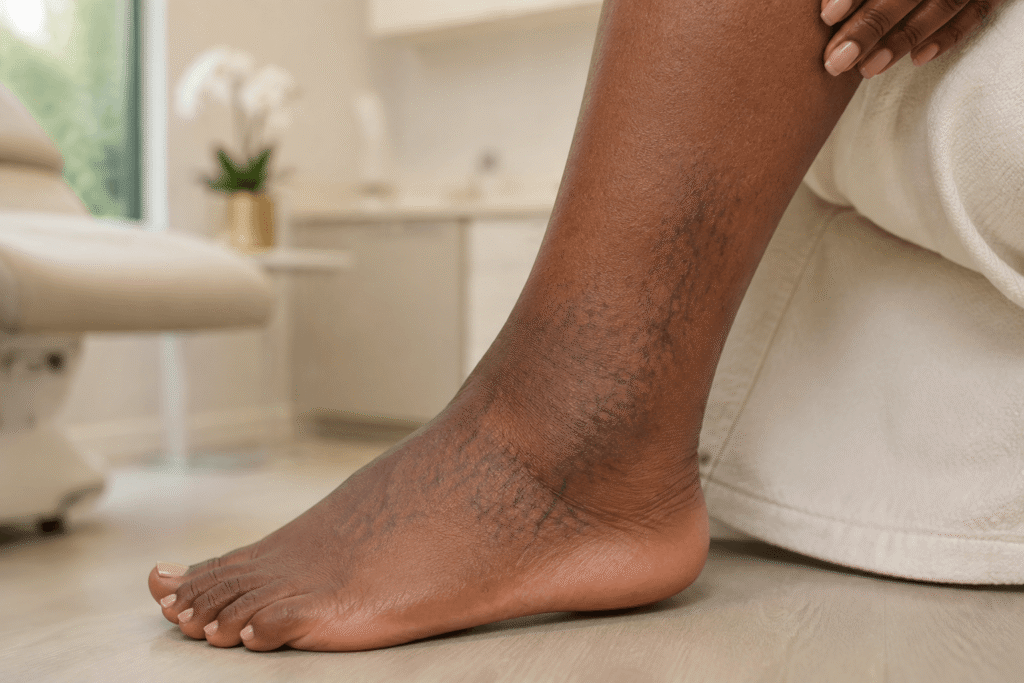
Spider veins are damaged, visible blood vessels just beneath the skin’s surface, appearing in a web-like or branching pattern. On the legs, the most common cause is venous insufficiency, when the tiny valves inside veins that normally keep blood flowing in one direction weaken and allow blood to pool, putting pressure on the vessel walls and causing them to become visible.
Other contributing factors include genetics (spider veins often run in families), hormonal changes, pregnancy, and prolonged periods of standing or sitting. Sun exposure is a more common contributor for spider veins that appear on the face.
How to Detect Spider Veins
- Thin, web-like or tree-branch-shaped red, blue, or purple veins visible through the skin
- Most common on the thighs, calves, and ankles, though they can appear on the face or hands as well
- Usually painless, though some patients notice mild aching, heaviness, or itching around larger clusters
- Symptoms like leg pain, swelling, or a heavy sensation, especially after standing, which can point to an underlying circulation issue rather than a purely cosmetic one
When Should You See a Doctor?
- Your legs feel achy, heavy, or swollen, particularly after standing for long periods
- You notice new spider veins appearing rapidly or in unusual patterns
- You have visible varicose veins (larger, bulging veins) alongside spider veins, which may warrant a circulation evaluation
- You want to understand whether an underlying venous insufficiency issue is contributing to your spider veins before pursuing cosmetic treatment
What Happens If Spider Veins Are Left Untreated?
Cosmetically, spider veins don’t fade or resolve on their own, and when the underlying cause is venous insufficiency, additional spider veins commonly continue to develop over time as the underlying vein pressure persists. From a purely appearance standpoint, this typically just means having more visible veins to treat the longer you wait.
If an underlying circulation issue is present and goes unaddressed, some patients experience worsening symptoms like aching, heaviness, or swelling over time, and larger, related varicose veins can occasionally develop further complications if left unmanaged. This is why an evaluation, not just cosmetic treatment, is worthwhile for anyone with symptoms beyond the visible veins themselves.
The Genesis Dermatology Process
- A consultation to assess your spider veins, ask about any associated symptoms, and determine whether further circulation evaluation is warranted
- Sclerotherapy for leg spider veins, a quick in-office procedure where a solution is injected directly into the vein, causing it to collapse and fade over three to six weeks
- Laser treatment as a non-invasive alternative, particularly effective for facial spider veins and smaller vessels
- Referral for a vascular ultrasound or to a vascular specialist if symptoms suggest an underlying venous insufficiency that needs its own evaluation
- A treatment plan that may involve multiple sessions for more extensive vein clusters