
Rough Skin

What Causes Rough Skin Texture?
Rough skin texture develops when dead skin cells aren’t shed efficiently and build up on the surface, a natural slowdown that happens as skin’s cell turnover rate decreases with age. Sun exposure compounds this by damaging collagen and elastin, leading to a thicker, less even surface over time, while inconsistent exfoliation, dehydration, and environmental factors also contribute to a rougher feel.
Certain skin conditions, past acne, clogged pores, and general inflammation, can also leave behind textural changes that persist even after the original issue has resolved, which is part of why rough texture often has more than one underlying contributor.
How to Detect Rough Skin Texture
- Skin that feels bumpy or uneven to the touch, even without a visible rash
- A dull, less reflective appearance, since a rough surface scatters light rather than reflecting it evenly
- Skin that looks flaky or feels tight and dry
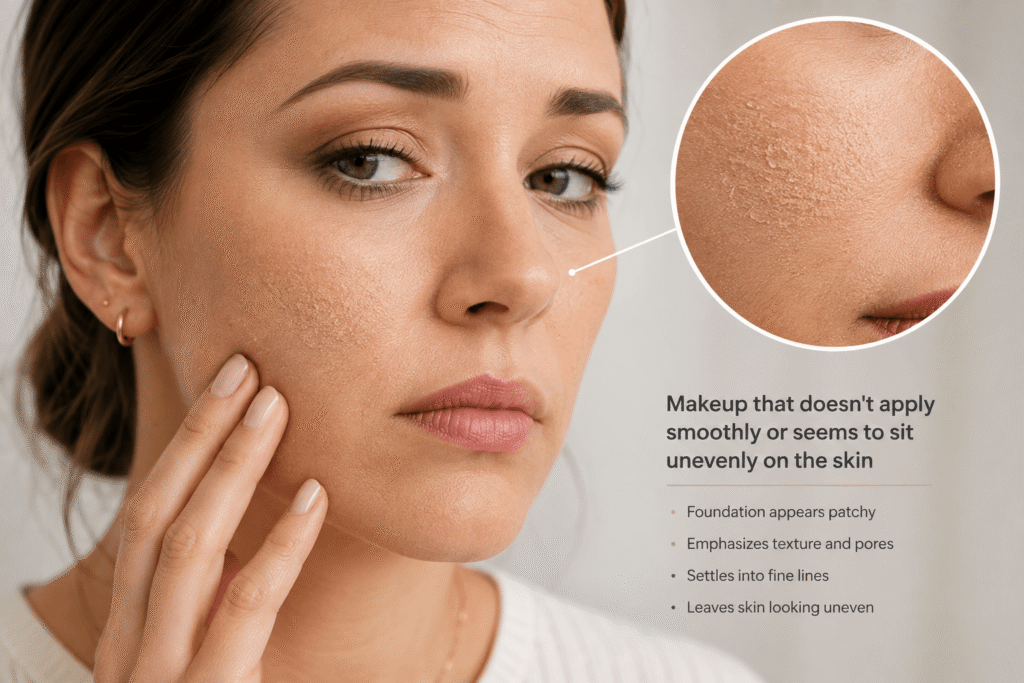
- Makeup that doesn't apply smoothly or seems to sit unevenly on the skin
- Texture that seems to have worsened gradually over months or years rather than appearing suddenly
When Is It Worth Treating Rough Skin?
- Rough texture is bothering you cosmetically or affecting how makeup or skincare products apply
- At-home exfoliation and moisturizing haven't produced the smoothness you're looking for
- You want to understand what's specifically driving your texture, whether it's cell turnover, sun damage, or another factor
- You're interested in a more comprehensive, in-office approach rather than continuing to rely on over-the-counter products alone
What Happens If Rough Skin Is Left Untreated?
Rough texture tends to gradually worsen rather than resolve on its own, since the underlying contributors, slowing cell turnover, ongoing sun exposure, and accumulated dead skin, continue to build without intervention. Left unaddressed, skin generally becomes progressively less smooth and less radiant over time, particularly with continued sun exposure.
Rough, compromised skin texture can also make the skin barrier less effective, potentially increasing sensitivity to irritants and making other skincare products less effective at penetrating and working as intended. Addressing texture proactively tends to produce a more meaningful improvement than waiting until the roughness has become more established.
The Genesis Dermatology Process
- A skin assessment to identify the specific factors contributing to your texture concerns
- Chemical peels, using glycolic, salicylic, or other exfoliating acids, to remove built-up surface cells and encourage smoother cell turnover
- Microneedling or laser resurfacing for more significant textural improvement and to stimulate deeper collagen production
- Prescription-strength retinoids to support ongoing cell turnover between in-office treatments
- A personalized skincare routine and sun protection guidance to maintain results and prevent further textural damage