
Squamous Cell Carcinoma
What Is Squamous Cell Carcinoma?
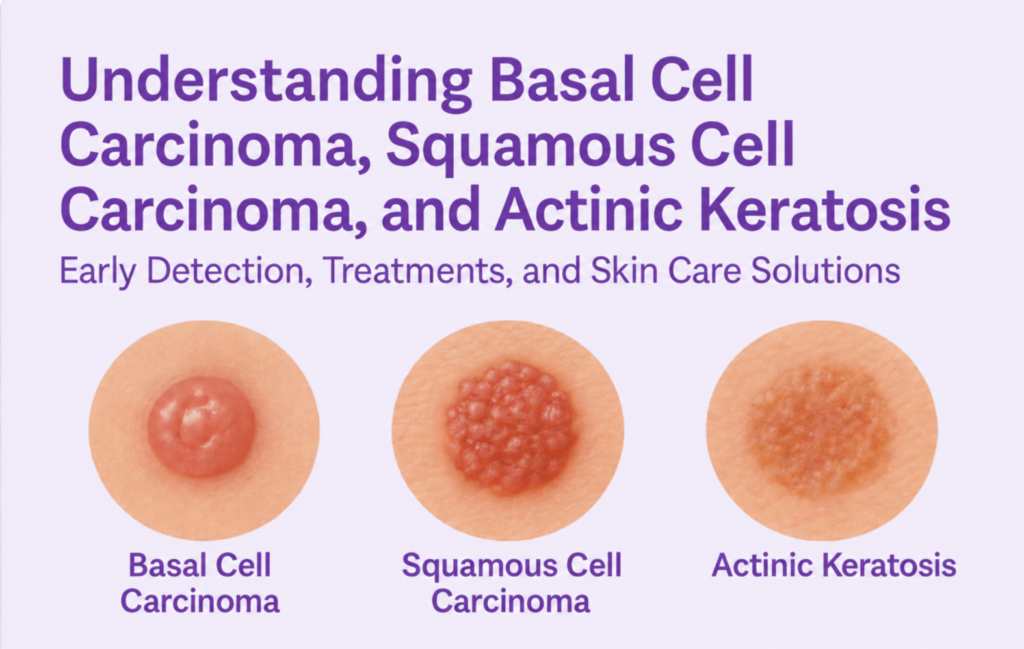
SCC develops when squamous cells accumulate DNA damage, most often from years of cumulative UV exposure, and begin to grow abnormally. It can arise on its own or develop from an untreated actinic keratosis, a precancerous rough patch caused by sun damage.
Unlike basal cell carcinoma, squamous cell carcinoma has a meaningful, though still relatively low, risk of spreading to lymph nodes and other parts of the body, particularly when it develops on the lips, ears, or in patients who are immunosuppressed (such as organ transplant recipients). That risk is one of the main reasons early diagnosis and treatment matter.
How to Detect Squamous Cell Carcinoma
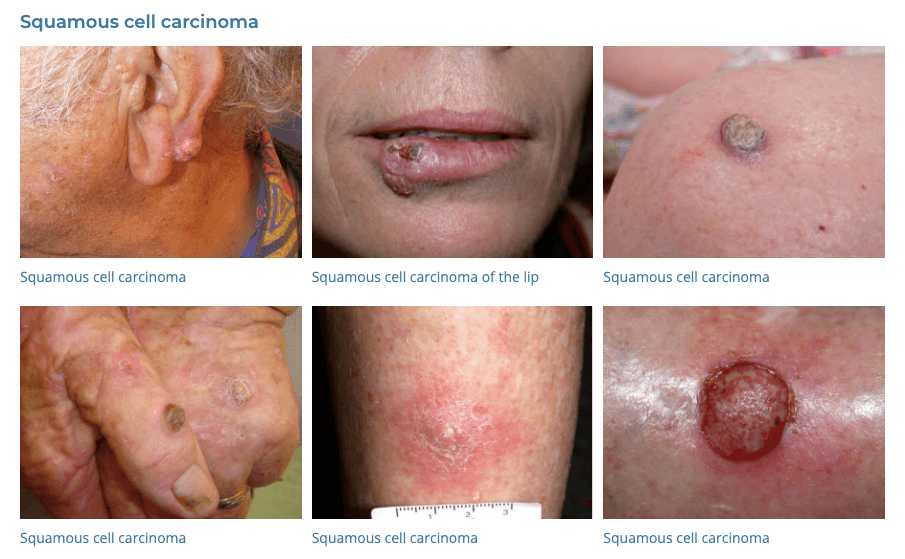
- A firm, red, dome-shaped bump, sometimes with a central crater or crust
- A rough or scaly red patch that may crust, bleed, or itch
- A wart-like growth that grows steadily over weeks to months
- A sore that doesn't heal, or one that heals and then reopens
- An existing rough, scaly patch (actinic keratosis) that starts to thicken, become tender, or bleed
- Most commonly found on the face, ears, lips, neck, scalp, and backs of the hands
When Should You See a Doctor?
- Any new growth, bump, or sore that doesn't heal within three to four weeks
- A known actinic keratosis that suddenly changes, thickens, or becomes painful
- A sore on the lip or ear that isn't healing, both higher-risk locations
- Any lesion that's growing quickly or has become tender to the touch
- You're immunosuppressed or have had an organ transplant, which raises SCC risk and warrants more frequent skin checks
What Happens If Squamous Cell Carcinoma Is Left Untreated?
Left untreated, SCC can grow deeper into the skin and invade nerves, a process called perineural invasion that can cause pain, numbness, or muscle weakness in the area. Deep, longstanding tumors are also more likely to spread to nearby lymph nodes and, in more advanced cases, to distant organs.
The location matters too. SCCs on the lips, ears, and temples are considered higher risk and more likely to spread if not treated promptly. What starts as a straightforward outpatient excision can turn into a much larger surgery, lymph node evaluation, or additional treatments like radiation if the cancer is allowed to progress.
The Genesis Dermatology Process
- A thorough exam of the lesion and surrounding skin using dermoscopy
- An in-office biopsy to confirm the diagnosis and assess how aggressive the cells appear
- Review of your pathology results, including any high-risk features that affect the treatment plan
- A treatment recommendation matched to your case, typically surgical excision or Mohs micrographic surgery, with additional workup (like lymph node evaluation or imaging) for higher-risk tumors
- A structured follow-up schedule, since a personal history of SCC increases the chance of developing another skin cancer